

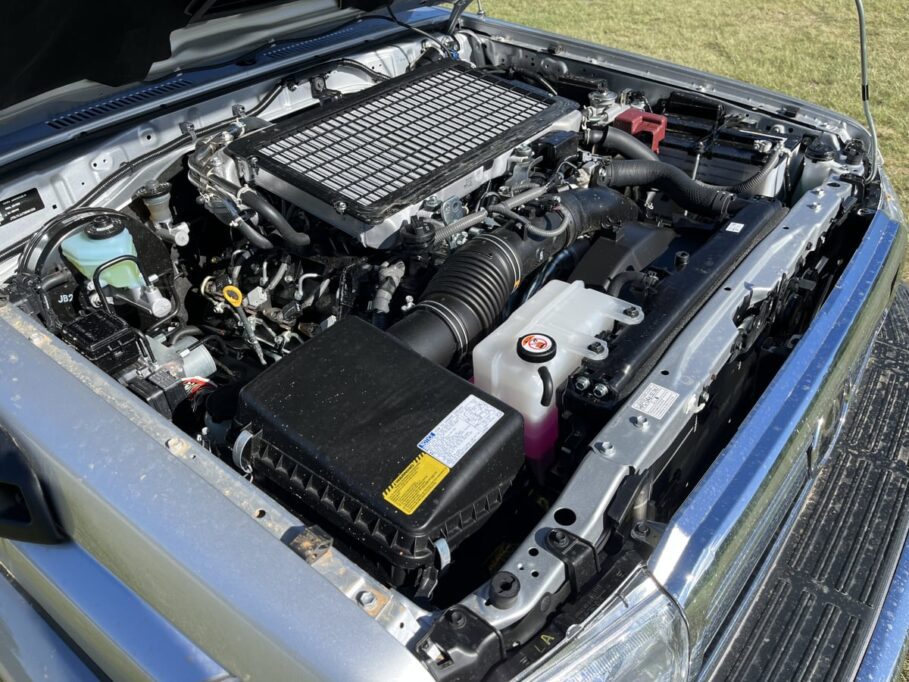
The installation of a top mounted intercooler has a certain cool factor in that you get a tough looking bulge in the bonnet. From a heat exchange perspective, it is not all that cool. From a safety perspective, since the bonnet is part of the impact zone and passenger protection the introduction of a hole, cutting through bracing is not that cool either.
The top mounted intercooler system is affectionately known as an “inter heater” since it is placed on top of a hot engine with the extra heat from the exhaust manifold, turbo and exhaust system. Heat is radiated from the engine and as heat rises it is also affected by convection. Both of these affects can be reduced (and overcome) with a scoop and thermofans providing the air flow over the core is sufficient.
We have yet to see a top mounted intercooler feel cold on the cold side of a running engine, even if it has only been driven mildly. It is always too hot to touch.
A common misnomer is that front mount intercoolers only work well once moving and that a top mount is good for slow speed. In a stationary situation on a dyno, (without a cooling fan in front of the vehicle) our front mounts prove to be more consistent in repeated high load runs. Shortly after the run, with the engine still running, the huge amount of air that is pulled through by the engines main fan cools down the intercooler outlet, pipework and even starts to chill the intake manifold.
Another assumption is that the bonnet scoop will actually scoop the air that you can feel against your hand or face when stuck out the window. The shape of the car will produce high and low pressure zones and also areas where there is not much air movement at all. The installation of a bullbar with the top bar (and / or a light bar) in front of the scoop will affect the air flow across the top of your bonnet. A HZJ or HDJ 70 series has such an issue and as water sitting on the polished bonnet will show – it is not until you get to around 90kph that the water will start to move towards the windscreen. Its little wonder that those who measure the outlet temperatures of their top mount intercoolers are not impressed.