
Hilux Performance Upgrades
What's up with the model numbers on Hilux's?
PDI’s earliest generation intercooler is for the KUN26, a 3.0L D4D turbo diesel engine known as the 1KD-FTV. The 1KD, appears to share the same block as the 1KZ series, with the same capacity but is direction injection via a common rail injection and a 4 valve per cylinder configuration. Additionally, a VNT turbo was used which effectively means the turbo has a better range, making more power but with variable geometry in the turbine housing, it can be more responsive (much like using a smaller turbo for low end response and a larger turbo that can make more boost for longer).
As per all Toyota models they assign a letter to each vehicle and for the Hilux that is the letter N – Landcruisers a J.
The 1KD-FTV started and finished with the KUN26 (N70) from 2005 until late 2015. Facelifts were introduced in 2008 and 2011. This whole model is referred to as the N70 as it is the 7th generation Hilux
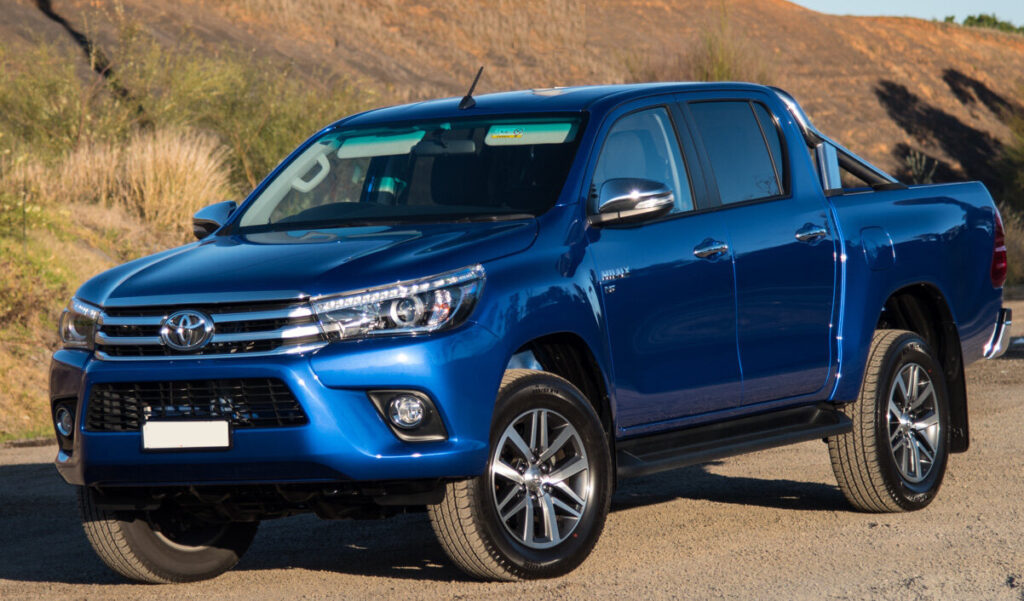
The next generation (8th) is referred to as the N80, starting in late 2015 and was released with the new 1GD-FTV, a 2.8L and is the GUN126. Apparently the engine is highly efficient, such that it remained in all Hilux’s through to the current model and was fitted into the 150 and 250 Prado, then also replacing the 4.5L V8 in the 70 series Landcruisers.
The N80 Hilux is has a code GUN126. Even the latest (2026) Hilux is a GUN126, is regarded as part of the 8th generation and has the same engine and structure for radiator support panel and inner guards.
The N70, N80 and N90 seems to have some interpretation into when the numbers changed from N80 to N90 and N90 is a facelift of the N80. Officially the latest is the N80.
How to make power in your N70 or N80 Hilux?
More fuel and more air is required. The injectors can be held open for longer, rail pressure is increased to get more fuel through with the same opening time. More air is added with more boost, while trying to maintain cooler air to increase air density.
The ECU is reprogrammable in these Hilux’s and the best first step is to have the ECU remapped – a piggyback chip could be used but they don’t have full control and the final outcome wont be as effective. There are many reputable companies who can do this successfully and in many cases you should expect improved full economy.
Due to the VNT turbo system it’s also now possible to target different boost levels at different load points – this is different to gated turbos that can only set maximum boost. A turbos ability to make boost is limited by its maximum turbine speed and that means that if boost ca be targeted across the range, higher boost can be targeted at low RPM and then reduced as the revs increase.
What’s that mean? The increase in power is limited in the top end by turbo size, but by running the turbo harder in the low end, much more torque is possible in the low to mid range on standard parts. If you don’t make it rev much then the difference is amazing, however the pullback in torque past a certain point becomes obvious and from there you need to upgrade to a larger turbo.
All common rail ECUs are much more responsive to intake temperatures as the factory is trying to maximise output, but doesn’t want to risk engine failure from high combustion temperatures. It is not uncommon to see over 20% pullback in engine output due to high intake temperatures and for normal driving having access to cooler air will increase the engine performance across the range. adding weight and load to you Hilux increases the load and speed at which intake temperatures can rise. For this reason, EGT gauges are pointless.
What You Should Know About Hilux Intercoolers and what makes PDI better?
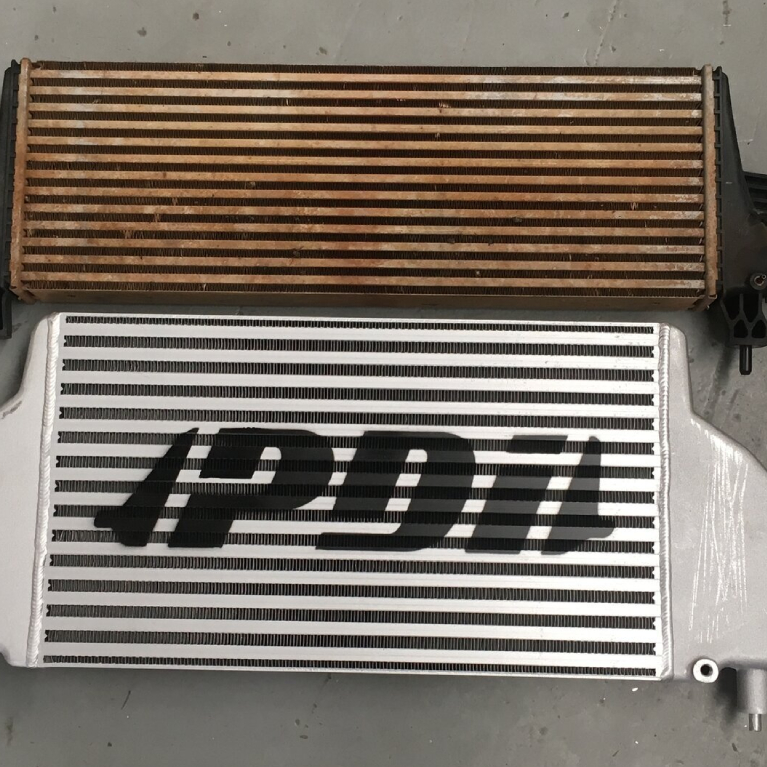
The N70 was fitted with a small top mounted intercooler. A facelift part way through the series increased the bonnet scope size to try improve efficiency – it’s not much better.
A PDI intercooler optimises size and efficiency to keep intake temperatures under control under all loaded conditions so that the ECU will not pull fuel under any conditions. We expect torque and air fuel ratios to be consistent so you maintain maximum power output when you need it.
We’ve been involved in the industry for several years and saw an opportunity to maximise the potential of diesel engines. The goal was to increase power, whether only by 20 or 200 percent while keeping the exhaust gas temperature as low as possible. Custom installations demonstrated positive results, and as a result, we formed our company out of a need for a better product.
- Our kits are suitable for high load demands which are ideal for towing purposes. However, our intercoolers meet the natural desire for increased performance due to the largest cores and custom moulded end tanks, among other enhancements.
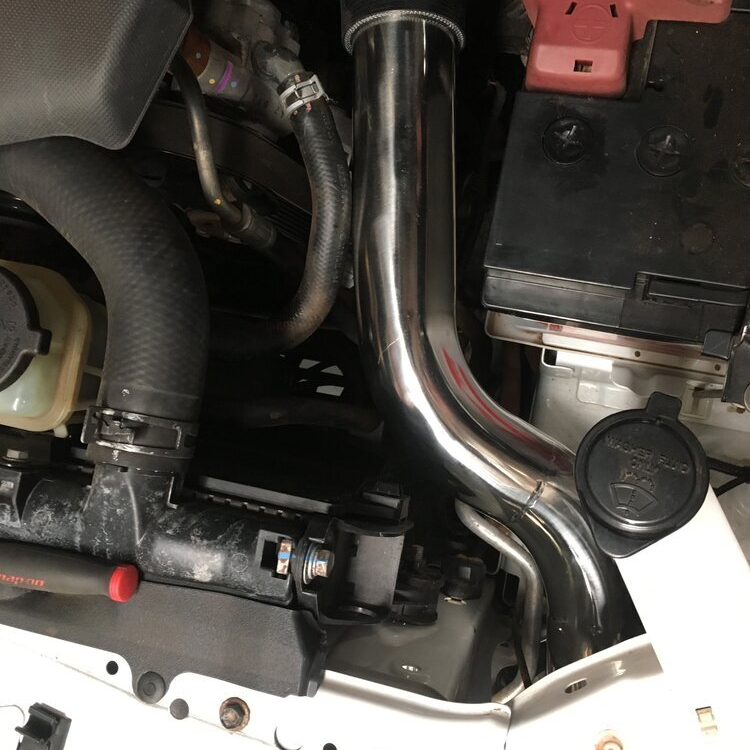
- The optimised piping that we use is ideal for power and reduced lag. Additionally, we only use stainless steel piping due to its low heat transfer and it’s easy to clean too. It works far better than aluminium, withstanding the vibrations of diesel engines which are more likely to travel on uneven surfaces.
- The intercoolers we have available online are custom fit with the core size maximised for efficiency and positioned to get draw through from the main engine fan, therefore, cools in both high and low speeds. As a result, your vehicle will drive as it should, even on a cold morning.
About Performance Diesel Intercoolers
Contact us for upgrades to your vehicle.