

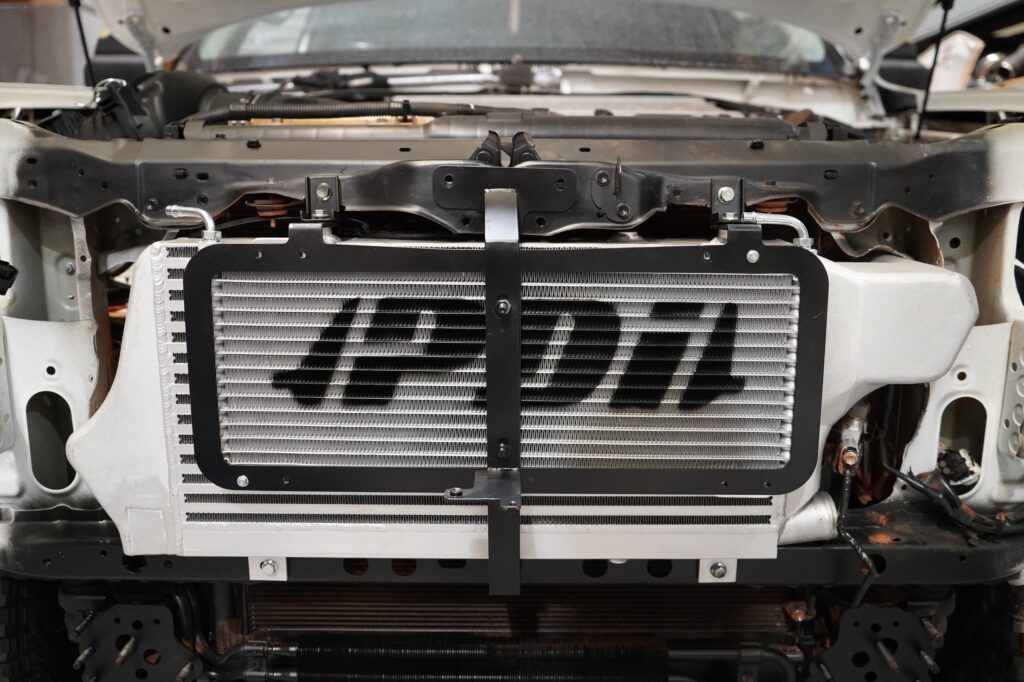
Ive seen some articles written around the place about heat sink on intercoolers and how less mass is better which then apparently becomes part of the design strategy. While it is an interesting property of intercoolers, at PDI we consider it of secondary importance in the design of our intercooler kits on turbo diesels that are being loaded up.
In electronics a heat sink helps to move heat away from a hot component to allow it to continue to function. Typically they have fins with high surface area so heat can be dissipated. In high performance computers they introduce a liquid cooling system to extract the heat from the area completely and allow the components to run cooler.
In intercoolers, heat sink is the ability absorb heat from the compressed inlet air into the intercooler itself. In vehicles that are on and off boost (ie turbo petrol vehicles), the temperature of the inlet air varies in excess of 200ºC and peaks can be taken off the top to try smooth out the air temperature and allow short burst of high load to be relatively safely achieved.
At Performance Diesel Intercoolers, we are not focused on smoothing out the temperature peaks as we supply intercoolers to the diesel performance market. Diesels are chosen for their ability to provide strong and constant torque when towing or working hard accelerating heavy vehicles for work or fun in tough conditions. Therefore our focus is on extracting the heat from the intercooler into the outside air and the result is that the inlet air is consistently cooler.
We get so many calls from customers who never before understood how hot the hot side of the intercooler can get and how the cold side of their PDI intercooler can be so close to ambient. Our own daily is an upgraded FTE powered 105 series Landcruiser and the cold air is between 3 and 7 degrees above ambient when driving around without a trailer. When towing the heavy camper trailer our intake temperatures rise to 15ºC above ambient, pulling a constant 100-200ºC out of the air at constant full load.
The fact that a PDI intercooler can do that consistently makes you think that it doesn’t matter that an end tank may have greater mass due to it being cast (instead of from sheet metal) since it is cold from the air passing through it anyway and the stronger bar and plate cores have proved to be exceedingly durable.
All PDI intercoolers use cast alloy end tanks for the ability to maximise intercooler size and optimise flow in complex areas that have fixtures (body, air con lines etc) which would limit the ideal placement of the intercooler.